
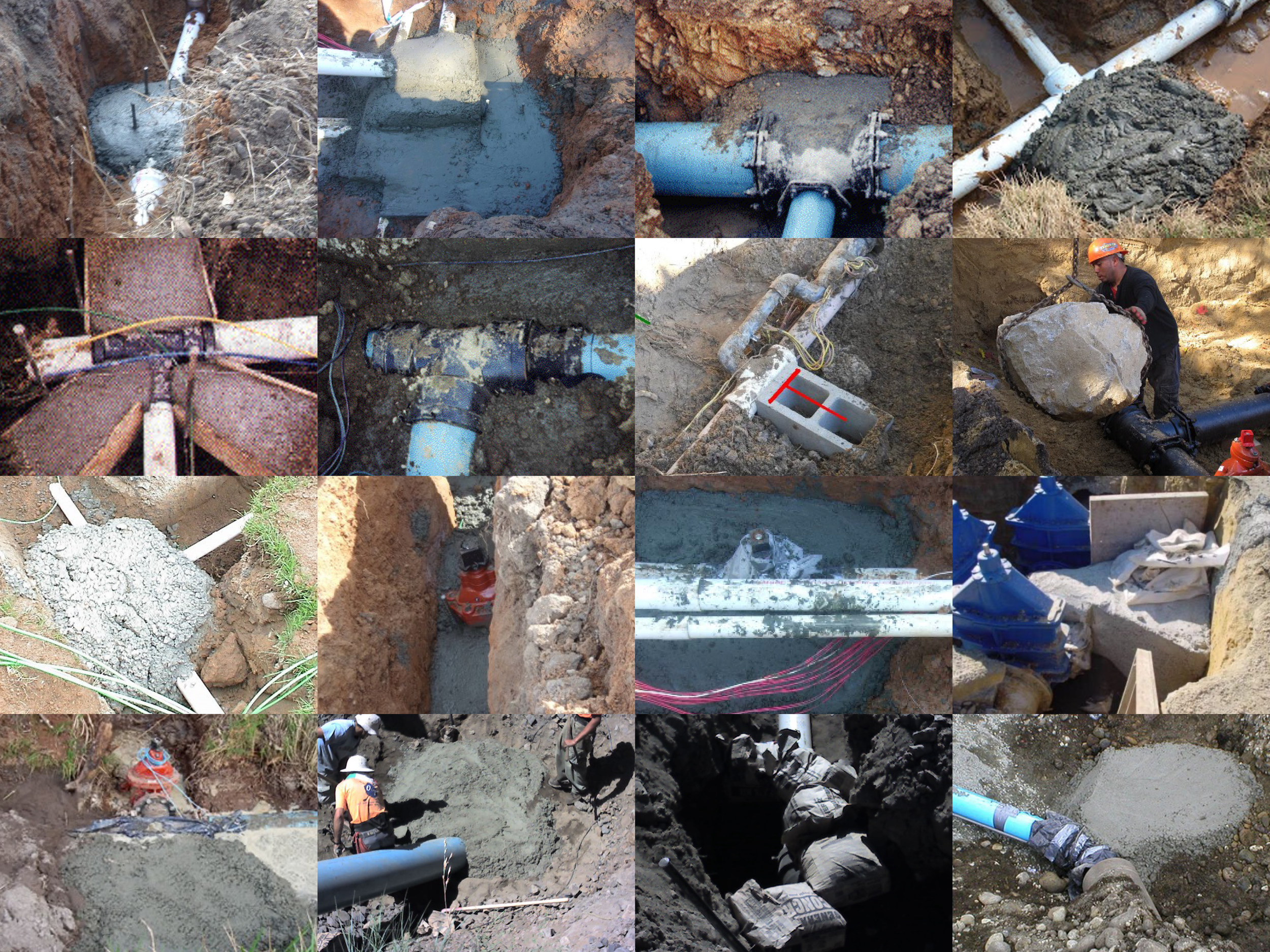
Thrust restraint is a critical component of irrigation system design, but it is also one of the biggest wildcards. Landscape architects design these systems to perform reliably in the field, yet with so many variables involved in traditional restraint methods, it’s difficult to ensure that the system will operate as intended.
Irrigation Systems Take an Invisible Beating
Water moving through an irrigation system accelerates, stops, and changes direction constantly. Every valve closure, pump cycle, or zone transition introduces a pressure event, and over time, those events add up as wear on the system.
At any change of direction in the pipeline, that energy translates into thrust forces, and even modest systems generate significant loads. For example, a 4-inch 90-degree elbow can see thousands of pounds of force, and an 8-inch elbow may need to withstand upwards of 20,000 pounds in thrust force (see diagram below). And these loads aren’t occasional. In many irrigation systems, they are part of normal operation.
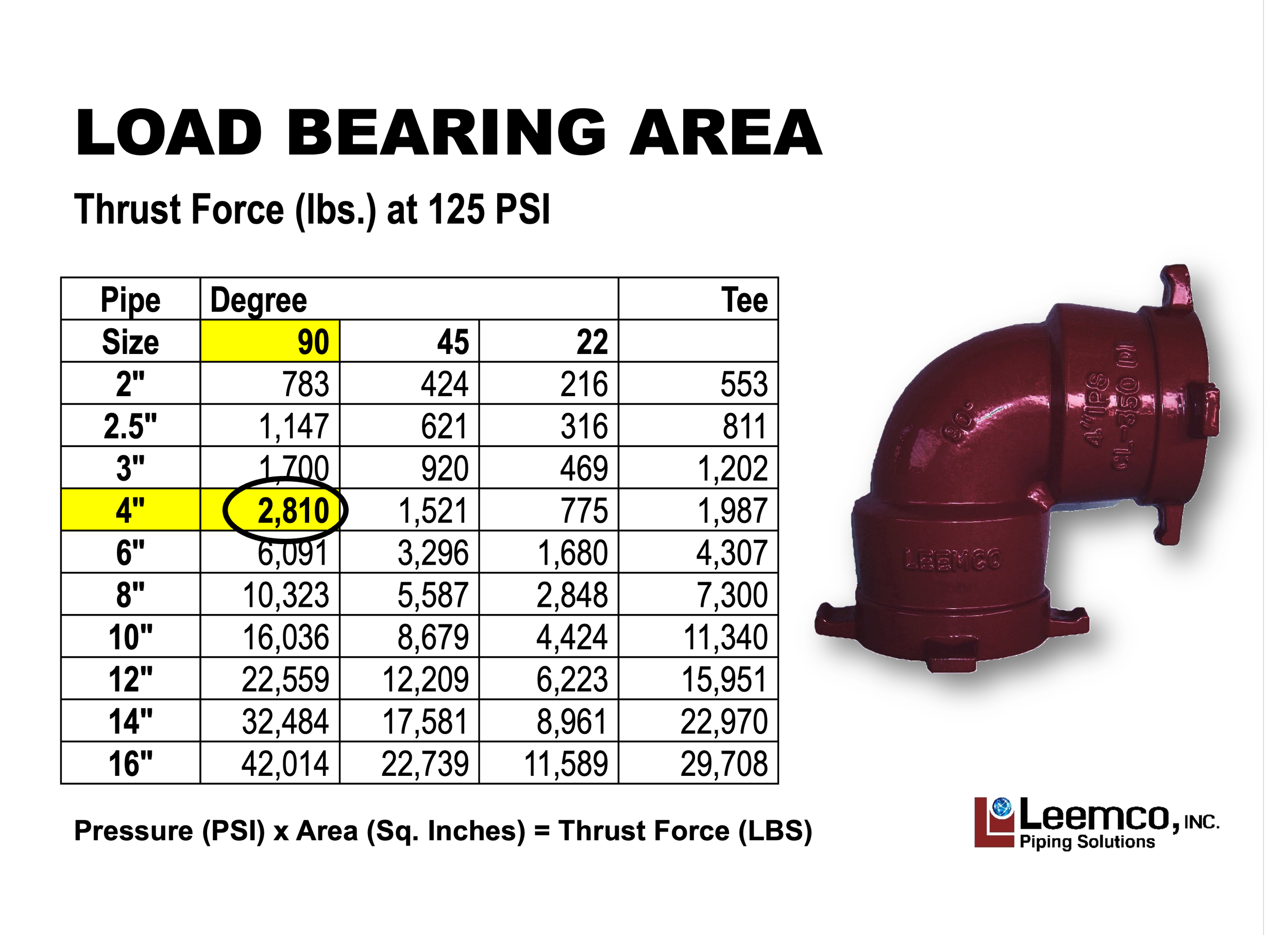
Even “modest” systems generate significant loads.
Why Thrust Blocks Became the Default
Concrete thrust blocks have long served as the standard response in our region. They act as a backstop, transferring force into the surrounding soil and holding the system in place. By bearing against undisturbed soil, the block spreads that force over a larger area, preventing the pipe from shifting at the joint. It’s a relatively straightforward solution using common materials on hand. In practice, however, thrust blocks introduce a layer of complexity that doesn’t show up on the design.
Where Variability Creeps In
Design considerations: Proper thrust block design depends on soil bearing capacity, geometry, and load calculations. These inputs are often generalized or assumed in irrigation work, and detailed geotechnical data is uncommon.
Construction variables: Even when the design intent is clear, the outcome depends heavily on the contractor. Installation methods (how the block is poured in the field) vary widely. Dimensions are adjusted to fit the trench. Soil conditions rarely match assumptions. Limited space around hardscapes, utilities, and root zones creates conflicts with large concrete masses. Cure time competes with construction schedules.
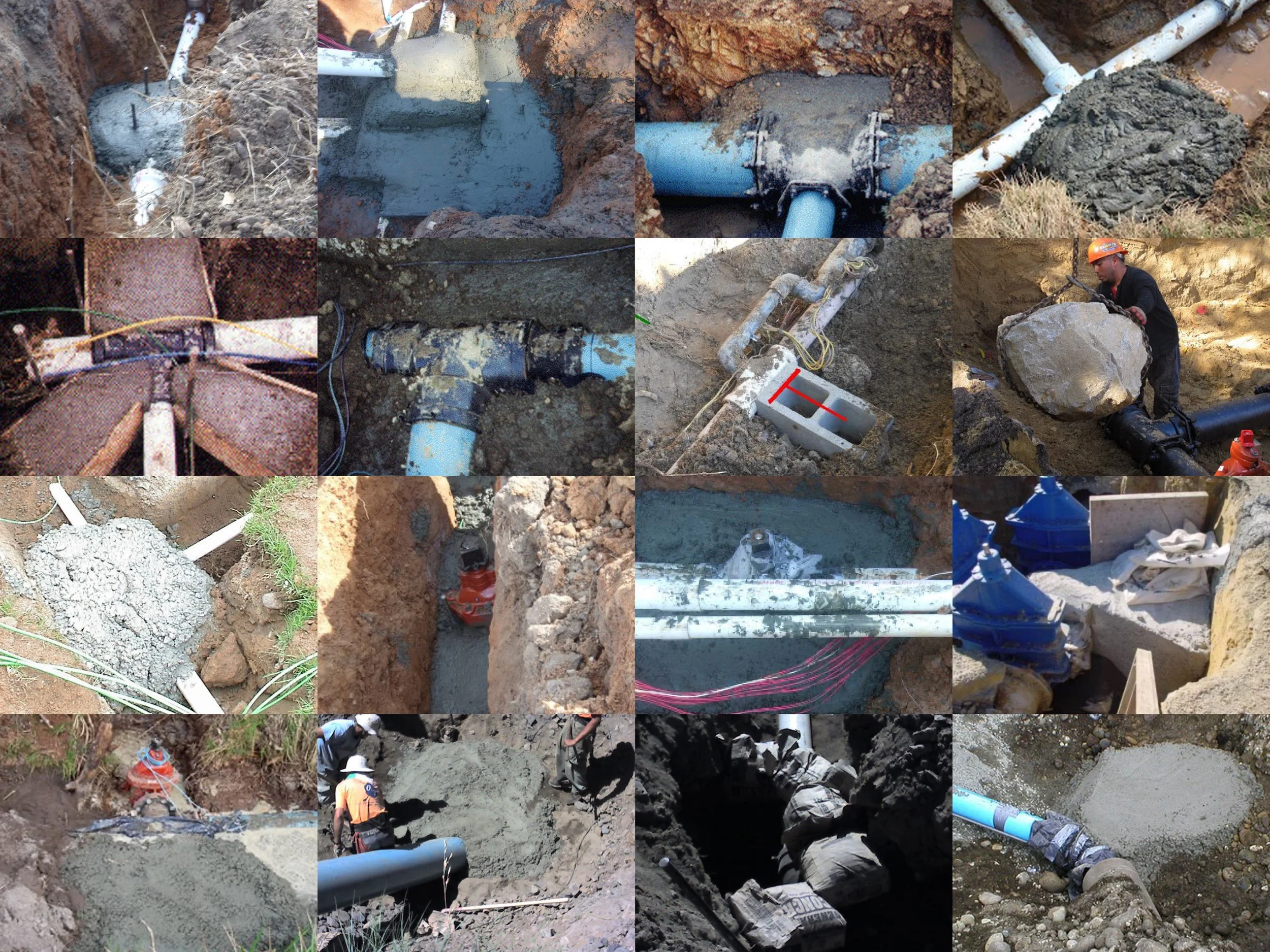
Thurst block construction is subject to many variables in the field.
What gets built often reflects these constraints more than the original design.
Systems often operate with undersized or inconsistently installed thrust blocks. The consequences show up later as leaks, movement and loss of system integrity.
All of this raises a reasonable question. Is there a way to achieve the same level of restraint without relying so heavily on field conditions and contractor judgment?
Built In Restraint
That question has led more designers to look at restrained joint systems, and that includes gasketed ductile iron restrained fittings.
Instead of creating resistance in the field with concrete, these fittings provide restraint within the connection itself. The joint is designed to handle thrust forces directly, without depending on soil bearing or concrete block geometry. The result is a more controlled and predictable outcome. This removes several variables from the design. There is no need to size thrust blocks for varying conditions. The system behaves more consistently because the critical performance element is manufactured, not formed on site.
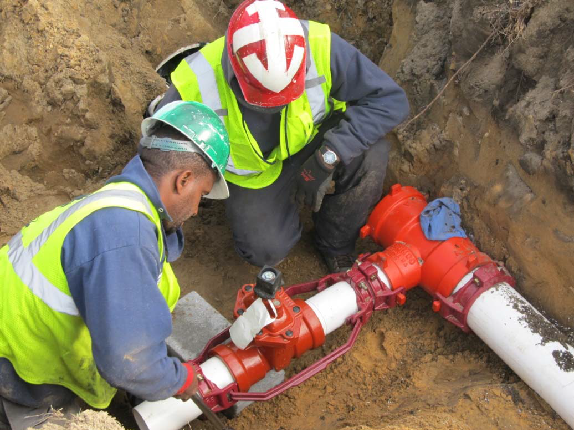
Advantages of Gasketed Ductile Iron Fittings During Construction
During construction, the differences are immediate. Excavation is more contained, since a fitting at a tee or elbow occupies far less space than a concrete block that may need to be several feet wide. There is no need to form or pour concrete, so no cure time to account for. Gasketed connections also eliminate the need for solvent weld primers or cements.
The installation process becomes cleaner and more repeatable, especially in tight or complex areas. These are meaningful efficiencies. On projects with multiple direction changes and fittings, they can influence both schedule and labor in substantial ways.
Objections: Cost and Familiarity
Material cost is often the first consideration when alternatives come up. Concrete thrust blocks can appear economical at a glance, especially when labor and installation variability are not fully accounted for. While the initial system costs may appear lower, the full cost often shows up later in labor, delays, and long-term maintenance.
Familiarity also plays a role. Thrust blocks are well understood, and many crews have developed their own methods over time. That familiarity has value, but it also introduces inconsistency. Whenever we show the math involved in determining proper block size, even experienced contractors admit they’ve been pouring blocks smaller than required.
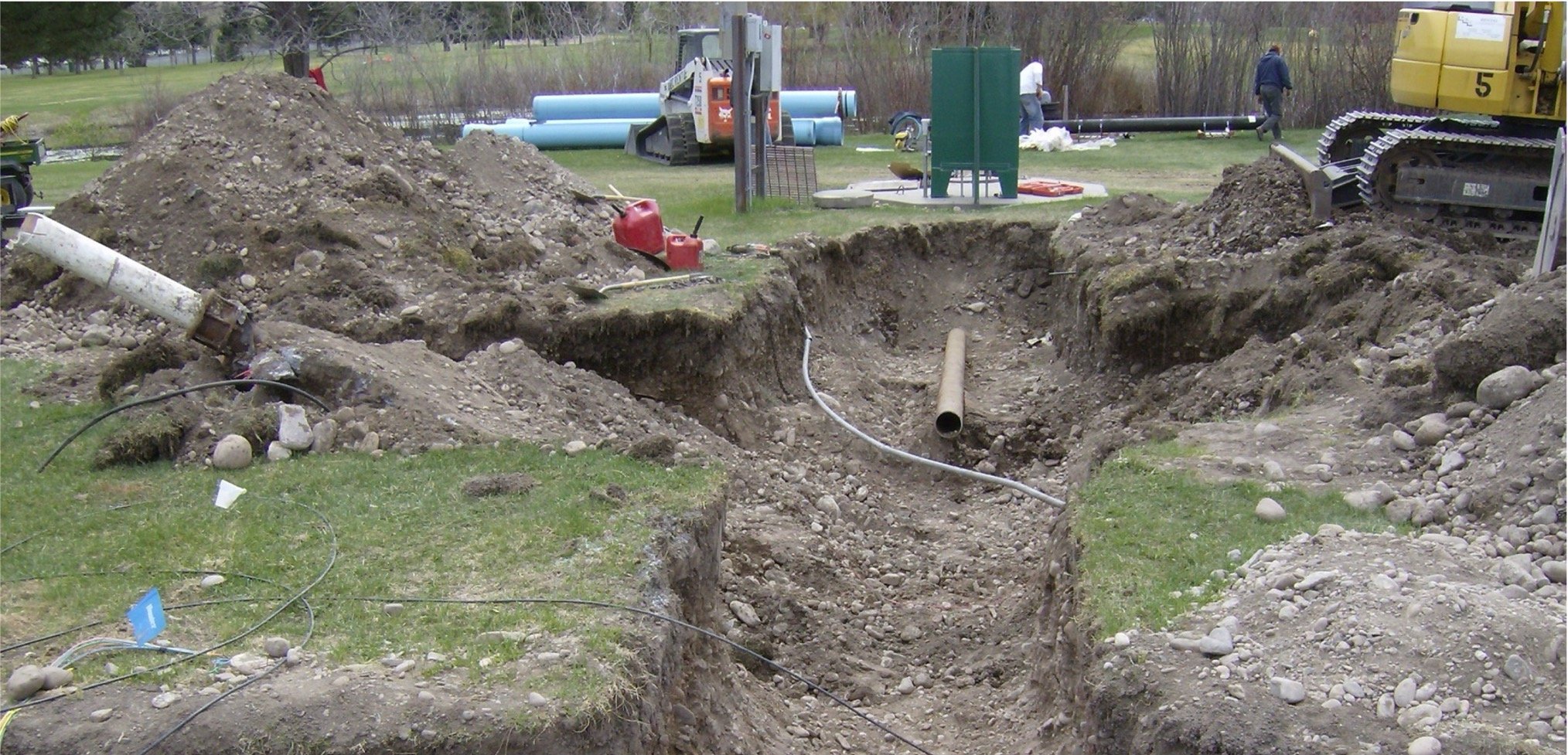
Disruption time and repair costs of thrust block failure in the field can be substantial.
Designing for What Will Actually Be Built
At its core, this is a quality control issue. Certain elements of a project will always depend on field conditions – that’s just part of construction. But gasketed ductile iron fittings create an opportunity to move a critical performance function out of the contractor’s hands and into a reliable fitting. This greatly reduces uncertainty and sets the system up for long-term performance.
Manufacturers such as Leemco provide these fittings across a range of sizes commonly used in irrigation systems, making them a practical option.
Traditional methods like thrust blocks remain widely used, but when the full range of variables is considered, they introduce risk that is often underestimated in design. And that gap is where most long-term issues begin. Gasketed ductile iron restrained fittings offer a more controlled approach.
For many designers, it starts with the simple question: Is there a better way?